

SOLD – SOLD – SOLD
The Eddy Merckx ETT1 was engineered at a time when aerodynamics was beginning to truly reshape bicycle design. Unlike the round-tubed frames of the 1990s, the ETT1 embraced carbon fibre’s potential for sculpted aero profiles, internal cable routing, and integrated geometry optimised for speed against the clock. With its angular silhouette, streamlined carbon seat mast, and aggressive time trial positioning, the ETT1 symbolised a new direction in competitive equipment—sleek, purposeful, and relentlessly fast.
This particular example is not just any ETT1. It is an original Quickstep team bike, prepared and raced as part of the Belgian squad’s competition fleet. That authenticity makes it far rarer than replica framesets or private builds. It is a genuine piece of professional cycling heritage, carrying the legacy of one of the sport’s most successful and iconic teams. The Quickstep organisation, emerging in 2003 from the ashes of the Mapei project, quickly established itself as a powerhouse in both the northern classics and Grand Tours. Its riders were celebrated not only for their attacking style but also for their technical innovation, often racing on the very latest equipment from sponsors such as Eddy Merckx.
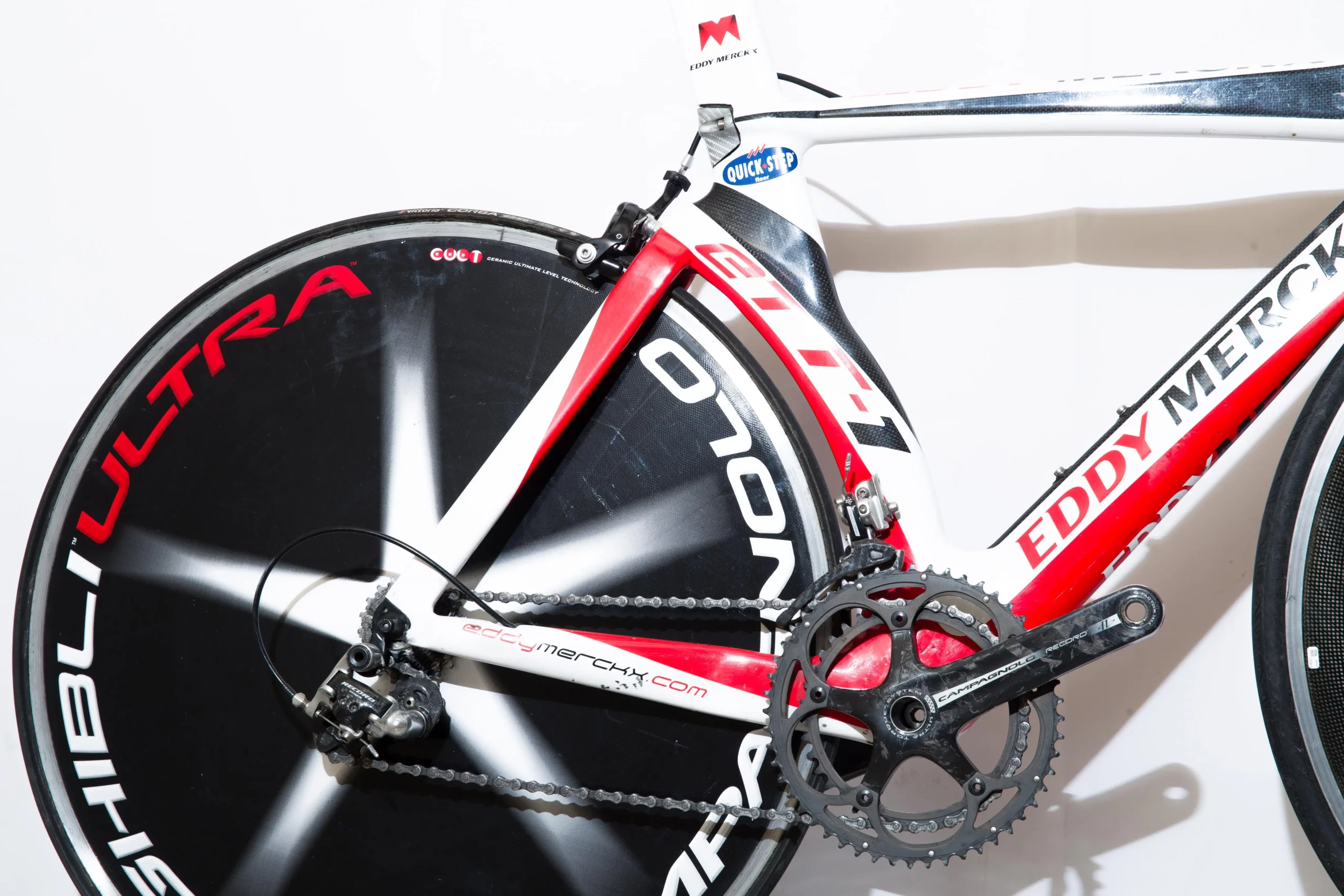
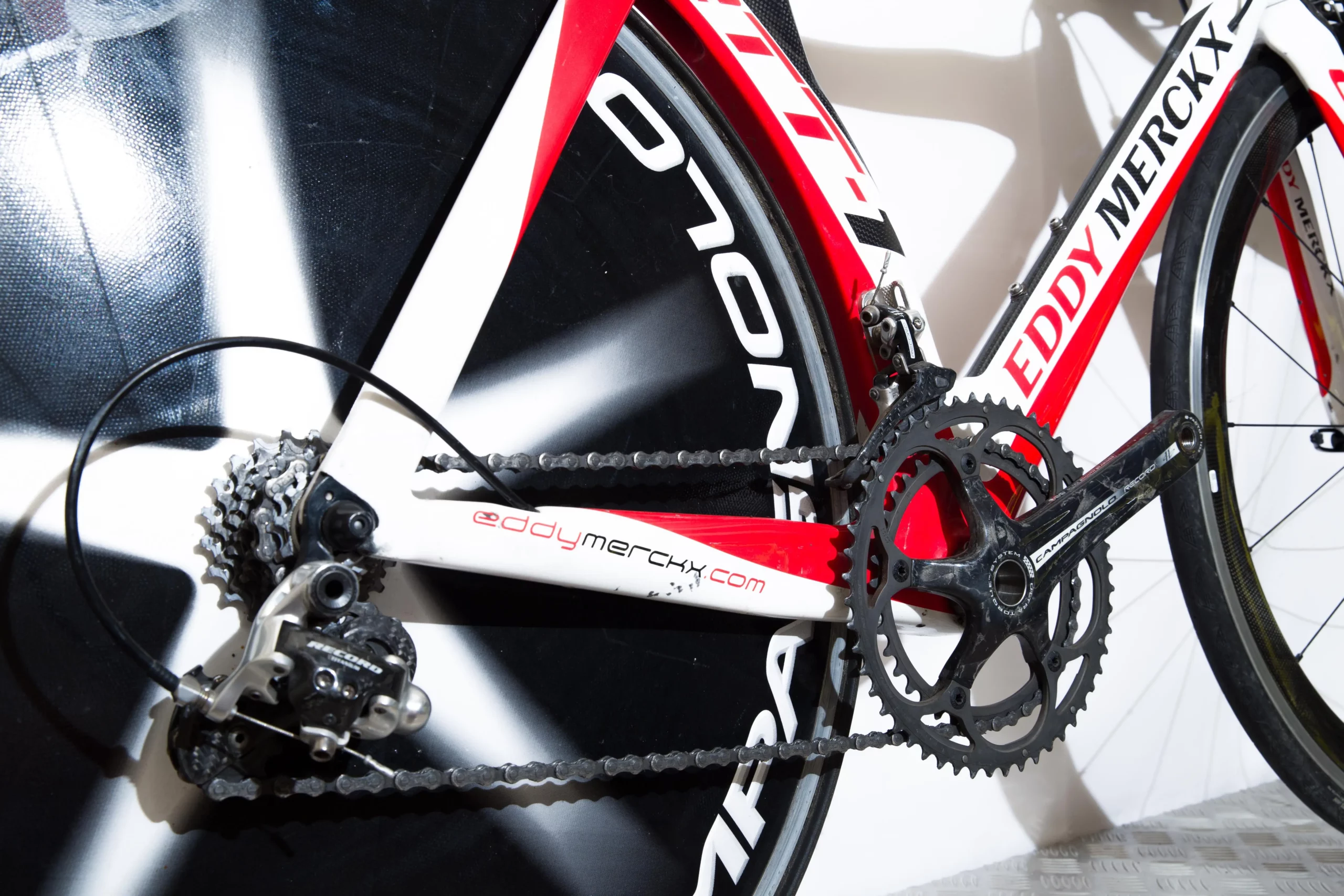
The build of this ETT1 captures that cutting-edge spirit. Fitted with Campagnolo Record 10-speed time trial components, it represents the very peak of Italian mechanical precision from the era. Record 10s offered fast, flawless shifting under pressure, the durability required for the demands of pro racing, and the elegance that has always defined Campagnolo’s top-tier offerings. The cockpit and extensions are configured for the aerodynamic, tucked TT position, underscoring the bike’s singular purpose: maximum speed over the course.
What truly sets this machine apart, however, is the wheelset. While many bikes from the era were paired with standard deep-section carbon rims, this example is equipped with a rare Campagnolo rear disc wheel—a piece of technology that was prized then, and even more so now. Disc wheels drastically reduce aerodynamic drag, smoothing airflow and cutting through headwinds, and were a hallmark of top-level time trial equipment in the early 2000s. To see a genuine Campagnolo disc wheel still in place on an original team bike is a rare and remarkable detail.
Although this bicycle is undoubtedly an authentic Quickstep team machine, one element of its history remains a mystery. The rider’s name sticker, once affixed to the top tube, has been removed at some point in the bike’s long life. Without that marker, it is difficult to determine exactly which athlete raced on this machine. It may have belonged to one of the team’s time trial specialists. More research is needed to piece together this final part of its story. Yet, in some ways, that uncertainty only adds to the intrigue: a professional tool from one of cycling’s most celebrated squads, with a history partly hidden and waiting to be rediscovered.
The significance of this bicycle lies not just in its components, but in what it represents. Time trial bikes from this period mark a transitional chapter in the history of racing technology. They stand between the aluminium era and the modern world of integrated carbon aero bikes, capturing the experimental and bold spirit of early carbon design. The ETT1 embodies this moment of change—an uncompromising machine built to chase seconds on the road.