SOLD – SOLD – SOLD
Few teams of the 1990s left as strong a mark on the collective memory of cycling fans as the Motorola squad. Their distinctive blue, red, and white jerseys, emblazoned with the bold “M” logo, became synonymous with professionalism, style, and a new international dimension in the peloton. Founded in 1991, Motorola was an American team built on the foundations of 7-Eleven, and it quickly established itself as one of the premier squads of the early 1990s. Over the years, it launched the careers of icons like Lance Armstrong and supported veterans such as Andy Hampsten and Steve Bauer. The team was also known for its sharp image, cutting-edge equipment, and international roster that welcomed riders from across the world.
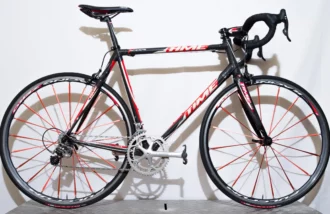
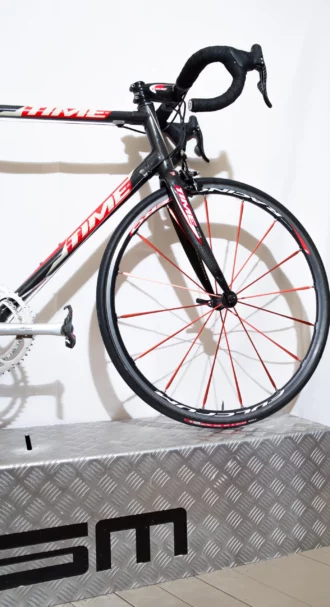
This Eddy Merckx Team Motorola bicycle is a meticulous reproduction of one of the most striking bikes of the era: the machine raced by Japanese rider Ken Hashikawa. While not an original team-issue frame, it has been built with such care and authenticity that it captures perfectly the look and spirit of the Motorola machines that lined up in the pro peloton between 1992 and 1996. The previous owner went to extraordinary lengths to ensure the bicycle’s accuracy, even sourcing an original decal set and a rider name sticker from another collector to recreate the bike as faithfully as possible. The result is a replica that stands as both a tribute to the team and to Hashikawa himself.
Ken Hashikawa may not be the most celebrated name of the Motorola roster, but his story is an important one. He was among the first Japanese riders to break into the professional European peloton at a time when Asian cyclists were still a rarity. His presence in a top-tier team like Motorola symbolised the growing globalization of professional cycling, foreshadowing the increasingly international character of the sport we see today. For Japanese fans, seeing Hashikawa compete against the best in the world was a source of pride and inspiration, and it helped lay the groundwork for later generations of Japanese pros.
The bike itself, of course, tells its own story. The frames of the Motorola team were supplied by Eddy Merckx Cycles, then one of the most respected manufacturers in the world. Built with precision steel tubing and carrying the brand name of cycling’s greatest champion, the frames were a perfect match for the team’s high ambitions. Their geometry combined comfort for long stages with the stiffness and handling needed for fast racing—qualities that made them beloved by riders and admired by fans. Painted in the unforgettable Motorola livery, these bikes were as much a visual icon of 1990s racing as the team kit itself.
This replica pays homage to that design in full. The blue-and-red paintwork, the bold block lettering, the details down to the name sticker—it all speaks to an era when steel frames, downtube shifters transitioning to STI levers, and box-section wheels defined the cutting edge of racing technology. While not ridden in the heat of professional competition, the bicycle captures the romance of that time in a way that few modern machines can. It’s a reminder of when the peloton was evolving rapidly, with carbon and aluminium frames beginning to appear, yet steel still reigned supreme for many of the world’s top teams.
What makes this bike particularly special is its link to Hashikawa. While many replicas are generic homages to an era or a team, this one is specific, personal. It recreates the machine of a pioneering Japanese professional, someone who represented a bridge between different cycling cultures and helped pave the way for future riders from Asia. The inclusion of the correct name sticker—sourced painstakingly from a fellow collector—gives the build a unique authenticity, even if the bike itself never saw racing action in the pro peloton.
The Motorola team eventually folded at the end of 1996, as corporate sponsorship shifted and the cycling landscape changed, but the impact of the squad remains powerful. Its bikes, kits, and riders occupy a special place in cycling history, symbolic of the professionalization and globalization of the sport in the 1990s. Today, original Motorola bikes are highly sought after by collectors, and even replicas like this one—executed with such care and detail—are treasured as part of cycling’s rich heritage.
For collectors and enthusiasts, this Eddy Merckx Team Motorola Ken Hashikawa replica is more than just a bicycle. It is a tribute: to a legendary team, to one of the sport’s most revered frame builders, and to a pioneering rider whose presence in the peloton marked a step forward for Japanese cycling. While not an original team bike, the meticulous attention to detail and the use of authentic decals and finishes make it an evocative reminder of an unforgettable era. It’s a machine that embodies the romance of cycling’s past, while offering a tangible link to one of its most iconic teams.